

Prediction markets in Great Britain exist in a legally complex environment that is shaped by existing gambling and financial regulation rather than by rules designed specifically for prediction markets. There is no standalone UK regulatory framework that explicitly defines, licenses, and supervises prediction markets as a unique category. Instead, whether a prediction market is legal or regulated in Great Britain depends on how it is structured, whether real money is involved, and which regulator considers it to fall within its remit.
In practice, most real-money prediction markets in Great Britain are treated as gambling products rather than financial markets. This distinction has major consequences for which platforms can operate legally, what kinds of markets can be offered, and how users are protected.
The primary regulator relevant to prediction markets in Great Britain is the UK Gambling Commission. Any platform that allows users to stake money on the outcome of a future event is likely to be classified as offering betting or gambling services. If such a platform targets users in Great Britain, it must hold a valid UK gambling licence and comply with strict rules around consumer protection, anti-money-laundering checks, age verification, advertising standards, and responsible gambling measures.
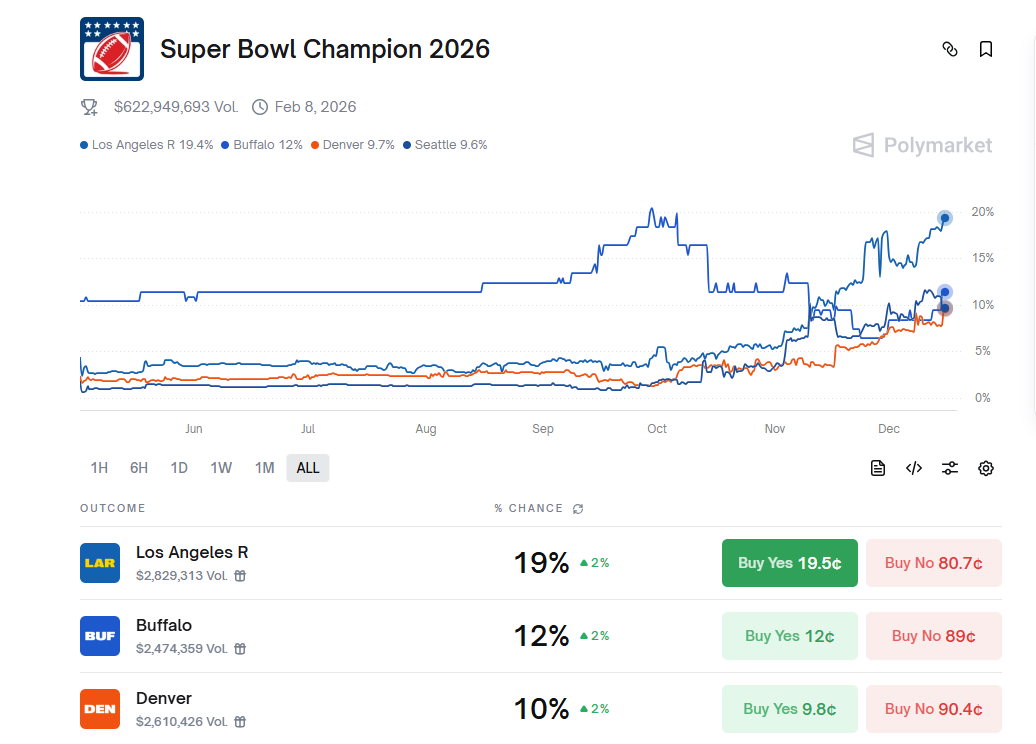
Because of this classification, prediction-market-like activity in Great Britain is most commonly found on licensed betting exchanges. These exchanges allow users to back or lay outcomes on events such as elections, referendums, sports, or other verifiable future outcomes. Although these platforms are not usually marketed as prediction markets, their mechanics are very similar. Prices move based on supply and demand, implied probabilities can be derived from prices, and the markets often serve as real-time forecasting tools.
More specialised prediction market platforms, particularly those that use fixed-payout contracts or resemble event-based derivatives, face greater regulatory barriers in Great Britain. Many of these products are viewed as too similar to binary options, which are heavily restricted or banned for retail users due to concerns about consumer harm. As a result, platforms offering contract-style prediction markets often cannot legally operate in Great Britain unless they fundamentally change their structure to fit within gambling regulations.
The Financial Conduct Authority, which regulates financial services and investment products in the UK, does not currently recognise prediction markets as a standard financial instrument such as shares, futures, or options. Because prediction markets do not fit neatly into existing financial categories, they are generally not authorised or supervised as regulated financial exchanges. This means prediction markets in Great Britain are rarely treated as investment products and are instead pushed toward gambling regulation or excluded altogether.
This regulatory approach has created a situation where many well-known global prediction market platforms are unavailable to UK users. Platforms that operate legally in other jurisdictions may restrict access from Great Britain because they lack the required gambling licence or because their products do not meet UK consumer protection standards. Crypto-based and decentralised prediction markets are particularly affected, as they often fall outside both gambling and financial licensing frameworks and raise additional concerns around consumer protection and financial promotions.
There is also an important distinction between real-money prediction markets and play-money or internal prediction markets. Play-money markets that use virtual currency and offer no real-world payouts are generally not regulated as gambling, as no money or money’s worth is at stake. Similarly, internal prediction markets used within companies for forecasting purposes typically fall outside public gambling regulation, provided they are not open to the public and do not involve real monetary rewards.
While Great Britain does not currently have a dedicated regulatory regime for prediction markets, the landscape is slowly evolving. Licensed gambling operators have shown increasing interest in offering products that closely resemble prediction markets while remaining compliant with gambling law. This suggests that, rather than creating a new regulatory category, the UK is more likely to continue absorbing prediction markets into the existing gambling framework.
In summary, prediction markets in Great Britain are regulated indirectly rather than explicitly. Most real-money prediction markets fall under gambling regulation, must be licensed by the UK Gambling Commission, and are subject to strict consumer protection rules. Prediction markets are not currently regulated as financial markets by the Financial Conduct Authority, and many contract-based or crypto-native prediction markets are unavailable to UK users as a result. Until a dedicated framework is introduced, prediction markets in Great Britain will continue to operate primarily as regulated gambling products or remain legally restricted.