
Prediction markets focused on political outcomes form one of the most active, controversial, and information-dense verticals in the broader prediction market ecosystem. These markets allow participants to trade on the likelihood of leadership changes, regime stability, elections, coups, resignations, and other shifts in political power. Rather than asking for opinions or expert commentary, political prediction markets translate uncertainty into prices that reflect collective expectations about what will happen and when.
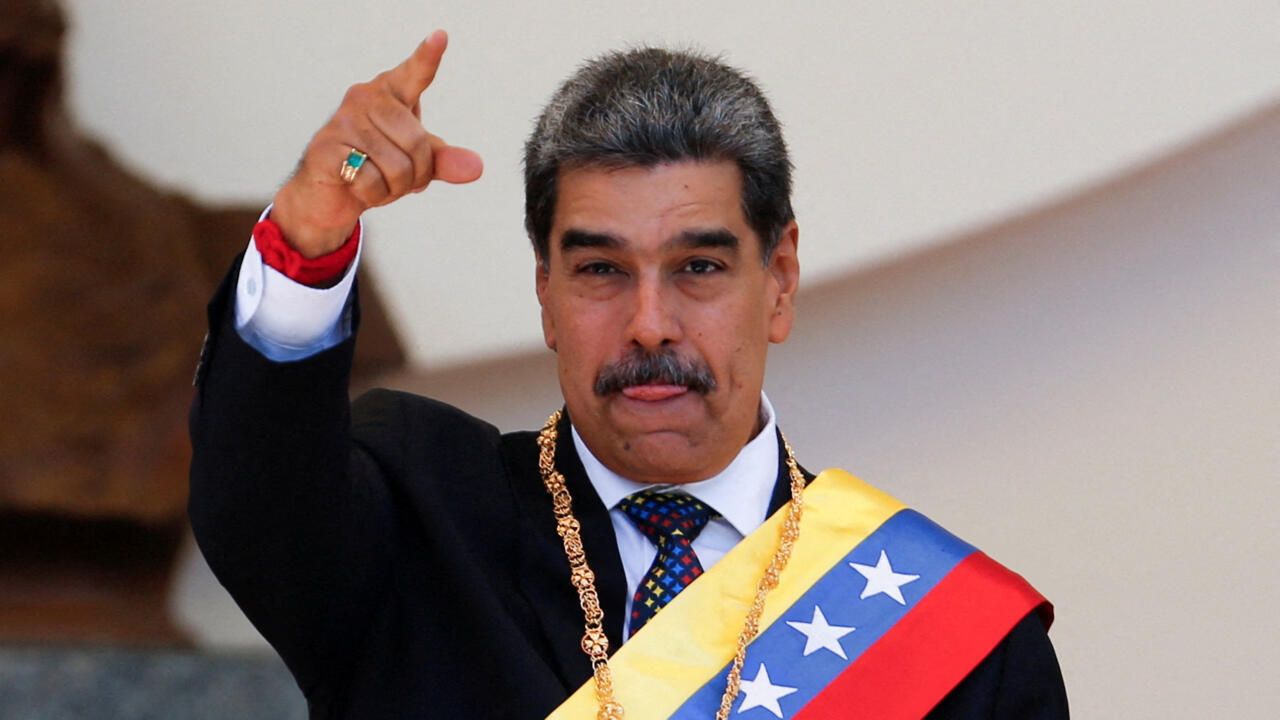
A market such as “Maduro out by…?” illustrates how this vertical works in practice. Instead of posing a single vague question about whether Nicolás Maduro will leave power, the market breaks the future into specific time windows. Separate outcomes exist for whether he is removed from power by the end of 2025, by January 2026, by March 2026, or by the end of 2026. Each outcome trades independently, allowing participants to express not just whether they think Maduro will fall, but how soon they believe it could realistically happen.
This time-based structure is central to political prediction markets. Political change is rarely binary in a simple sense. Regimes can persist for years and then collapse suddenly, or they can weaken gradually without formally ending. By offering multiple deadlines, the market captures the probability distribution across time rather than forcing all uncertainty into a single yes-or-no question. A low probability for removal in 2025 combined with a higher probability by the end of 2026 signals that traders believe change is possible, but unlikely in the near term.
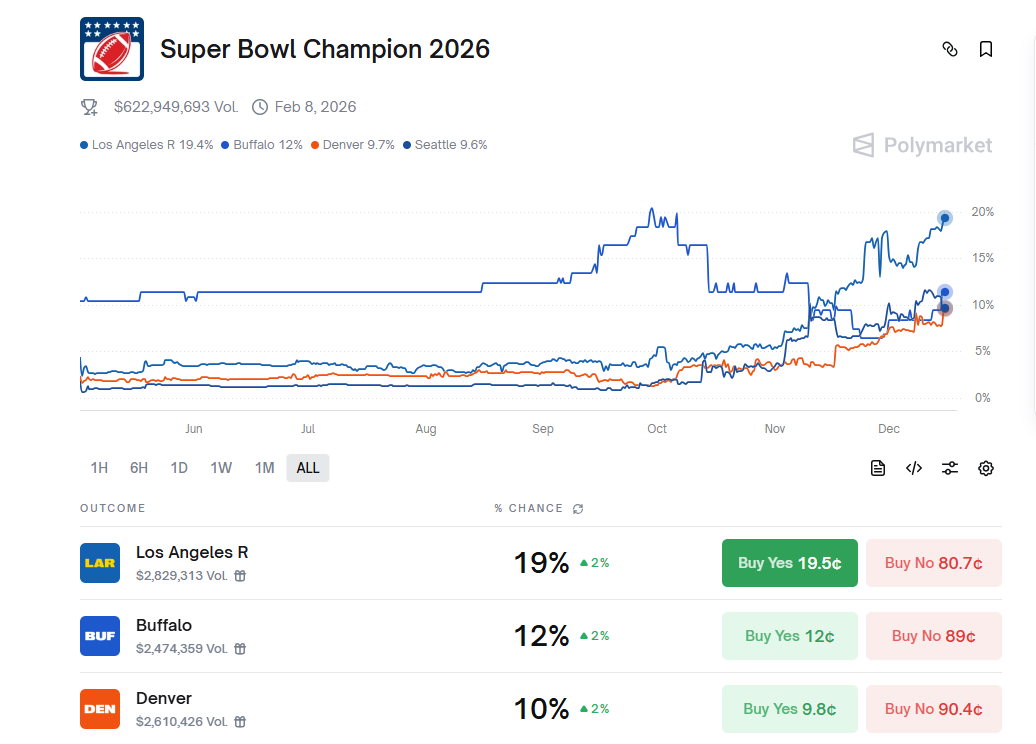
The prices in these markets act as probabilities. When a “Yes” outcome trades at seven cents, the market is saying there is roughly a seven percent chance of removal within that timeframe. When a later outcome trades above fifty percent, it suggests the majority of market participants believe that, given enough time, the regime may not survive. These prices are not predictions made by one analyst or institution; they emerge from thousands of individual trades backed by real money, reputational capital, or both.
Political prediction markets also reflect how traders weigh structural power versus short-term shocks. In authoritarian systems like Venezuela’s, participants often debate institutional control, military loyalty, economic collapse, foreign intervention, and popular unrest. Traders who believe entrenched regimes are historically resilient may sell early “Yes” outcomes and buy “No,” expecting the government to survive near-term pressure. Others may buy longer-dated outcomes, betting that prolonged economic strain or geopolitical shifts eventually force change.
The commentary and discussion around these markets reveal another layer of how the political prediction vertical functions. Traders frequently reference historical precedents, intelligence leaks, troop movements, sanctions, and diplomatic signals. Some comments are speculative or emotional, while others attempt serious probabilistic reasoning. Despite the noise, the market price tends to filter this information, rewarding traders who correctly assess which signals matter and penalising those who overreact to rumours or ideology.
Volume plays a critical role in interpreting political prediction markets. When tens of millions of dollars are traded on a market about a sitting president’s removal, it suggests that participants view the question as genuinely uncertain and highly consequential. High volume generally improves price quality because it brings in diverse views and reduces the impact of any single trader’s bias. Low-volume political markets can be distorted by small groups or motivated traders, but heavily traded ones tend to stabilise around a consensus probability.
One reason political prediction markets attract so much attention is that they often surface uncomfortable or taboo questions. Traditional media may avoid assigning explicit probabilities to regime collapse, coups, or foreign intervention. Prediction markets do not avoid these questions; they formalise them. This makes them valuable tools for understanding perceived risk, even when the outcome is unlikely. A low probability does not mean “impossible,” only that the market believes it is unlikely given current information.
Another defining feature of this prediction vertical is the importance of precise resolution rules. Markets like “Maduro out by…?” carefully define what counts as removal from power, including resignation, detention, or being prevented from fulfilling presidential duties. This precision matters because political power can be ambiguous. Clear rules reduce disputes and give traders confidence that outcomes will be resolved consistently based on credible reporting rather than subjective interpretation.
Political prediction markets are often misunderstood as statements of moral preference or political advocacy. In reality, they are closer to risk assessments. Buying “No” on an early removal outcome does not necessarily mean supporting a leader; it may simply reflect a belief that the regime is more stable than outsiders think. Likewise, buying “Yes” on a long-dated outcome may reflect a belief in eventual change rather than imminent collapse.
Over time, this prediction vertical has proven particularly useful for analysts, journalists, and observers who want to understand not what people hope will happen, but what they think will happen. When probabilities shift sharply, it often coincides with real developments such as elite defections, military movements, legal actions, or international escalation. In this way, political prediction markets function as real-time barometers of perceived regime risk.
At their best, political prediction markets do not claim certainty. They present uncertainty honestly, broken into time, probability, and competing narratives. A market where early removal is priced very low but longer-term removal is priced much higher tells a nuanced story: stability today, fragility tomorrow. That kind of signal is difficult to capture with headlines or opinion polls, but it emerges naturally when people are forced to quantify their beliefs.
This is why the political prediction market vertical remains one of the most compelling applications of prediction markets. It turns opaque power dynamics into measurable expectations, aggregates global perspectives into a single signal, and provides a framework for understanding political risk that is continuously updated as events unfold.