
Let’s See How It Measures Up?
Artificial intelligence forecasting is often misunderstood because many people imagine prediction as something absolute, almost like science fiction. In reality, modern AI forecasting is not usually about perfectly predicting the future. It is about identifying probabilities, patterns, behavioural tendencies, and statistical advantages faster and more efficiently than humans can.
https://gamma-api.polymarket.com
The reason AI forecasting has become so important is because modern civilisation itself increasingly runs on prediction. Financial markets depend on forecasting. Governments depend on forecasting. Supply chains depend on forecasting. Sportsbooks depend on forecasting. Insurance companies depend on forecasting. Even social media algorithms are essentially prediction systems trying to forecast what users are most likely to click, watch, share, or engage with next.
At its core, AI forecasting works because massive amounts of data now exist everywhere. Human beings cannot manually process billions of data points simultaneously, but machine learning systems can identify relationships, correlations, anomalies, and behavioural patterns across enormous datasets almost instantly. The AI is not “seeing the future” in a mystical sense. It is recognising repeating structures hidden inside historical and live information.
In stable environments, forecasting accuracy can become extremely impressive. Weather forecasting is one of the clearest examples. Modern AI systems can analyse atmospheric pressure, humidity, temperature, wind movement, satellite imagery, ocean conditions, and decades of historical weather data simultaneously. The result is that short-term weather forecasts today are dramatically more accurate than they were even twenty years ago. AI models have begun outperforming some traditional physics-based weather systems because they can detect subtle patterns too complex for humans to manually model efficiently.
But forecasting becomes much harder when human emotion enters the equation. Financial markets, gambling markets, elections, and speculative economies are driven not just by mathematics but by fear, greed, psychology, crowd behaviour, misinformation, narratives, and irrational decision-making. Humans themselves constantly react to forecasts, which changes the outcome being forecasted. That creates feedback loops and instability.
This is why financial forecasting is so difficult. If an AI identifies a profitable pattern in the stock market, thousands of traders may eventually discover the same pattern and exploit it until the advantage disappears. Markets evolve continuously because participants adapt. In many ways, forecasting financial systems resembles trying to predict the behaviour of billions of emotional humans interacting simultaneously under changing incentives.
Even so, AI systems have already become extraordinarily powerful within financial and speculative environments. Hedge funds, trading firms, sportsbooks, advertisers, and governments all use predictive models heavily because even a small increase in accuracy can create enormous advantages at scale.
That is one of the most important concepts people often miss. Forecasting does not need to be perfect to be immensely valuable. If two competing systems exist and one predicts outcomes correctly 55% of the time instead of 50%, that small edge can generate billions over large enough volumes. In gambling, finance, advertising, and trading, tiny predictive advantages compound massively over time.
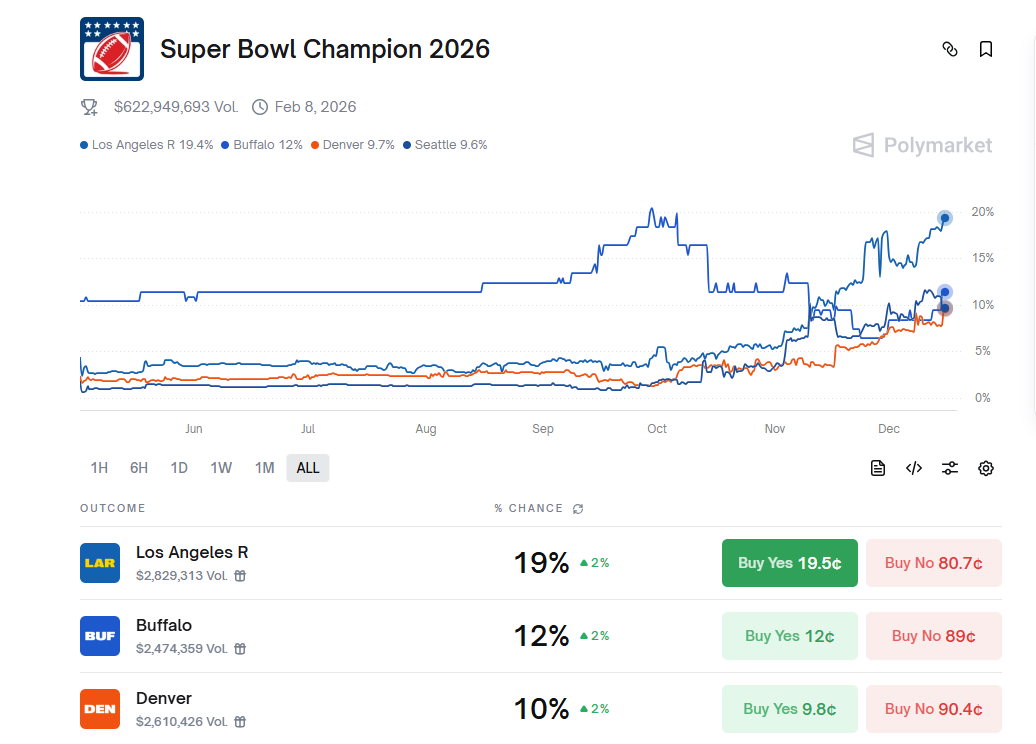
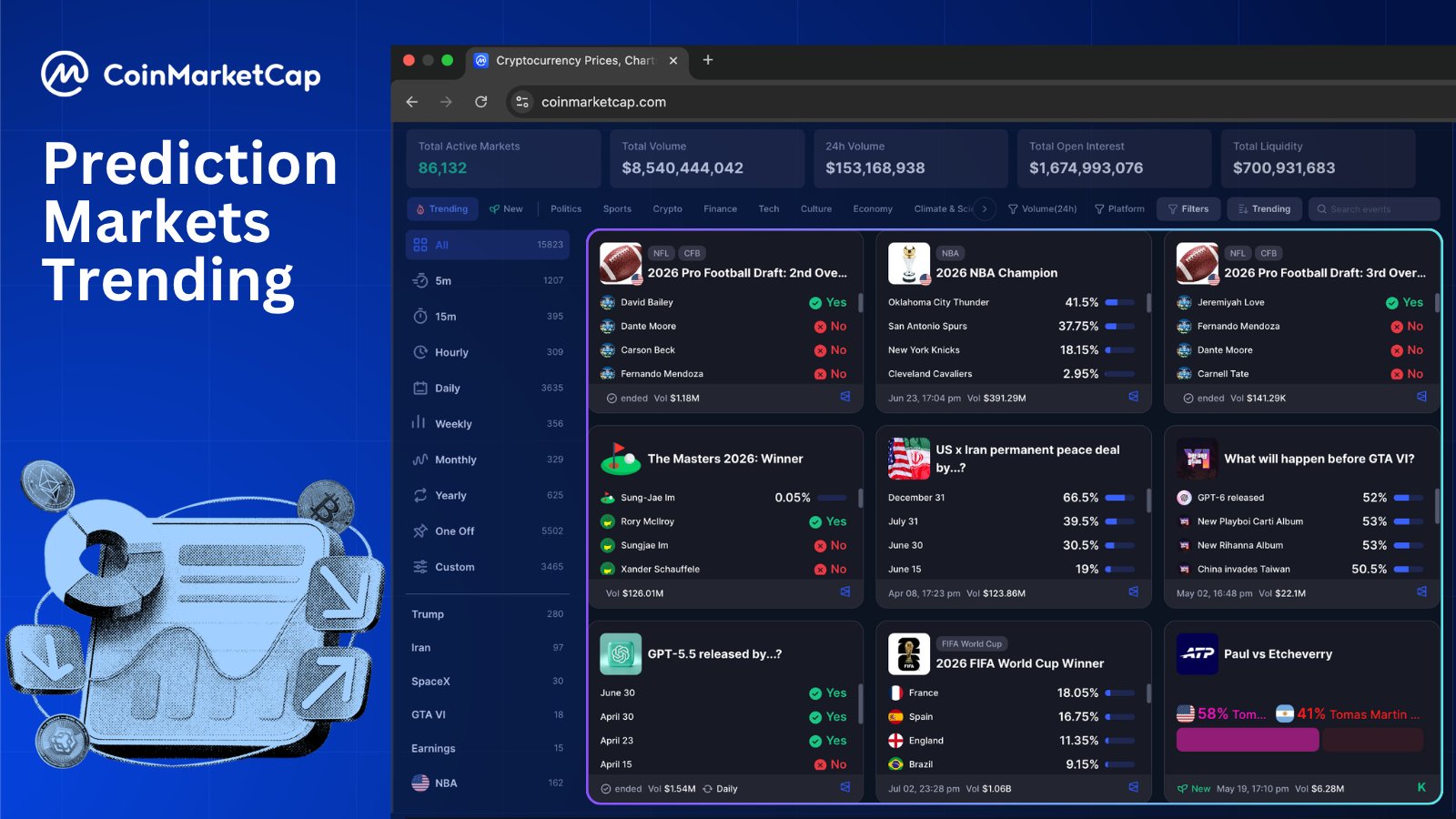
This is also why prediction markets are so interesting. Prediction markets combine financial incentives with collective human intelligence. Instead of simply asking people what they think will happen, prediction markets force participants to financially commit to their beliefs. That changes behaviour significantly because people tend to think more carefully when money is involved.
Historically, prediction markets have often outperformed polls, pundits, and expert panels because markets aggregate distributed information from thousands or millions of participants simultaneously. A prediction market effectively becomes a constantly updating probability engine driven by crowd intelligence.
Artificial intelligence makes this even more powerful because AI can monitor:
- live sentiment,
- breaking news,
- trading behaviour,
- social media trends,
- economic indicators,
- betting flows,
- and behavioural changes
all in real time.
When AI systems combine with prediction markets, something extremely interesting begins to happen. Human intuition and machine computation start reinforcing each other. Humans contribute contextual understanding, emotion, incentives, rumours, and crowd behaviour. AI contributes pattern recognition, speed, statistical analysis, and large-scale data processing.
That combination may ultimately become one of the most accurate forecasting mechanisms humanity has ever created.
However, there are still major limitations. AI forecasting struggles most in environments containing black swan events or chaotic systemic shifts. Pandemics, wars, assassinations, financial crashes, revolutionary technologies, political collapses, and cultural transformations can completely disrupt historical patterns. AI models trained on past behaviour can fail badly when reality changes in unprecedented ways.
This is because AI fundamentally learns from historical relationships. If something genuinely new occurs, forecasting becomes much harder.
Human beings themselves also remain unpredictable. People do not always act rationally. Public psychology can shift suddenly. Narratives can spread virally. Fear and panic can override logic entirely. Social media can distort perception at enormous scale within hours. A single event, video, rumour, or political statement can rapidly change global behaviour.
That unpredictability is why the best forecasting systems increasingly focus on probabilities rather than certainties. Serious forecasting organisations rarely say something definitely will happen. Instead they assign probabilities to multiple possible outcomes.
This probabilistic approach is actually far more realistic because the future is rarely fixed. Most future events exist as competing probabilities constantly shifting based on new information.
The real revolution happening now is not simply AI becoming smarter. It is the emergence of real-time global intelligence systems capable of continuously monitoring human behaviour at planetary scale. Prediction markets, AI forecasting, social media analysis, search data, behavioural economics, and live sentiment tracking are all beginning to merge together into giant predictive ecosystems.
The implications are enormous.
Governments may use forecasting systems to anticipate economic instability or civil unrest. Financial firms may use them to detect market shifts before competitors. Sportsbooks may refine odds more efficiently than ever before. Media companies may identify viral narratives before they explode publicly. Advertisers may predict consumer behaviour with increasing precision. Political campaigns may target persuasion efforts based on predictive behavioural modelling.
This is why forecasting itself is becoming one of the most valuable forms of leverage in the modern world. Information alone is no longer enough because everyone has access to overwhelming amounts of information. The real advantage increasingly comes from interpreting that information faster and predicting what happens next more accurately than competitors.
In many ways, the future global economy may increasingly revolve around predictive advantage itself.
Those who can forecast behaviour, sentiment, trends, risk, and probability more accurately may ultimately control enormous amounts of wealth, influence, traffic, capital, and decision-making power across nearly every major industry on Earth.