
For decades, Las Vegas was not just a city. It was the global symbol of gambling, spectacle, nightlife, casinos, risk-taking, entertainment, jackpots, neon, excess, and escapism itself. The moment people heard the word “Vegas,” they instantly understood the atmosphere being referenced.
Now the strange thing happening in the digital era is this:
Everybody wants a piece of that identity.
Suddenly every seaside arcade strip becomes “Vegas.”
Every slot site becomes “Vegas.”
Every casino app uses Vegas themes.
Every online operator borrows Vegas imagery.
Every social casino borrows the language.
Every game studio recreates the aesthetic.
Every influencer uses the iconography.
Yet the actual physical Las Vegas — the real one in Nevada — risks becoming diluted as the internet fragments gambling into thousands of disconnected digital experiences spread across millions of websites.
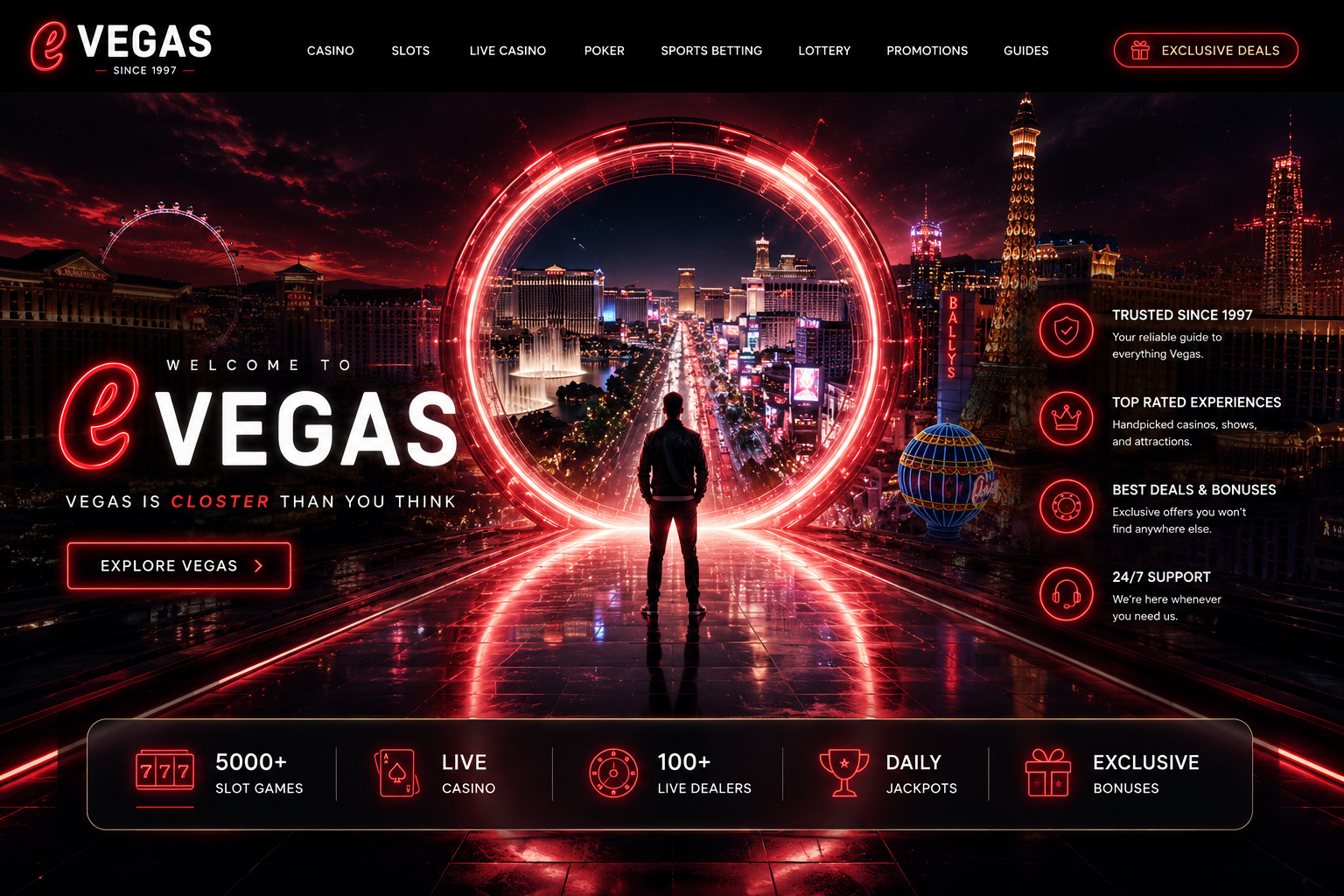
That is where the idea behind E‑Vegas.com becomes genuinely interesting.
Because instead of trying to steal a tiny slice of Vegas identity, the project attempts to consolidate it.
Not “Vegas inspired.”
Not “Vegas style.”
Not “Vegas themed.”
But an actual digital extension of Vegas culture itself.
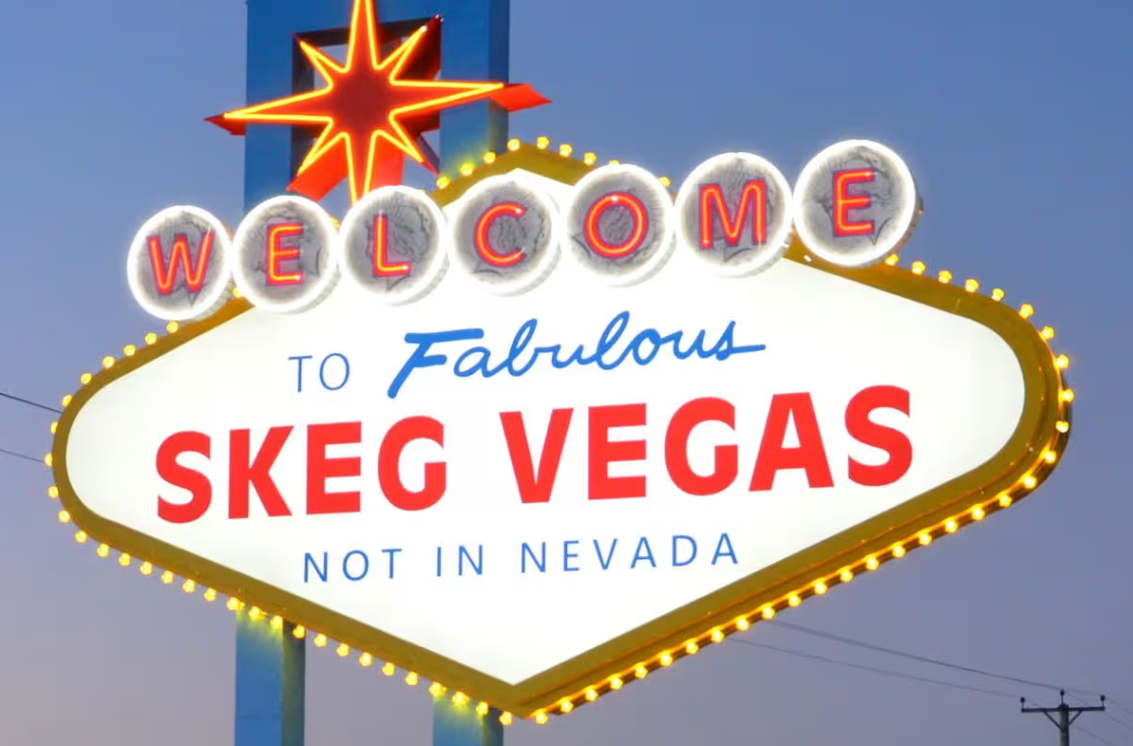
The “Skeg Vegas” sign accidentally highlights the exact problem.
Vegas became so culturally dominant that the world copied it everywhere.
But now nobody really owns the digital conversation.
Google results for gambling are fragmented.
Casino brands are fragmented.
Affiliate sites are fragmented.
Bonus sites are fragmented.
Streaming is fragmented.
Entertainment is fragmented.
Even Vegas news is fragmented.
The danger is that Vegas eventually becomes merely a visual theme rather than remaining the undisputed authority behind gambling entertainment culture.
That is why a UK-based platform trying to build an actual “electronic Vegas” is strategically different.
The idea is not:
“Here’s another casino link.”
The idea is:
“What if Vegas itself had a central digital destination?”
One place where:
shows,
casinos,
news,
sportsbooks,
streamers,
live dealers,
Vegas trips,
Sphere events,
gaming culture,
online bonuses,
and digital entertainment ecosystems
all coexist under one recognisable Vegas identity.
That becomes more powerful in an AI-driven world.
Because AI systems increasingly look for:
recognised entities,
authority hubs,
brand consistency,
structured knowledge,
and centralised relevance.
If Vegas does not consolidate digitally, its identity risks being endlessly copied while the actual commercial authority disperses across thousands of unrelated operators.
Ironically, a replica sign in a British seaside town almost becomes symbolic of the entire situation.
Everybody loves Vegas.
Everybody copies Vegas.
But very few are actively defending Vegas as the original authority.
And that is where the humour works perfectly.
“A seagull wouldn’t swoop this low to nick your chips.”
Because in many ways, digital gambling has spent years swooping around stealing fragments of Vegas identity without necessarily contributing back to Vegas itself.
The funniest twist of all?
The “take off the take off” concept.
Someone humorously removing a parody Vegas sign and replacing it with “E-Vegas.com” almost feels like reclaiming the digital narrative.
Not aggressively.
Not legally.
Not corporately.
Just symbolically saying:
“If the whole world wants Vegas online…
maybe Vegas should actually have a proper online home.”
The visual practically writes itself:
The famous “Skeg Vegas” sign partially dismantled overnight.
Workers removing the word “Skeg.”
New glowing lettering sliding into place:
“Welcome to Fabulous E-Vegas.com”
Neon skyline.
Digital casino glow.
Slot reels flickering.
A mischievous seagull flying away with stolen chips in its beak.
And underneath:
“Vegas Is Closer Than You Think.”