
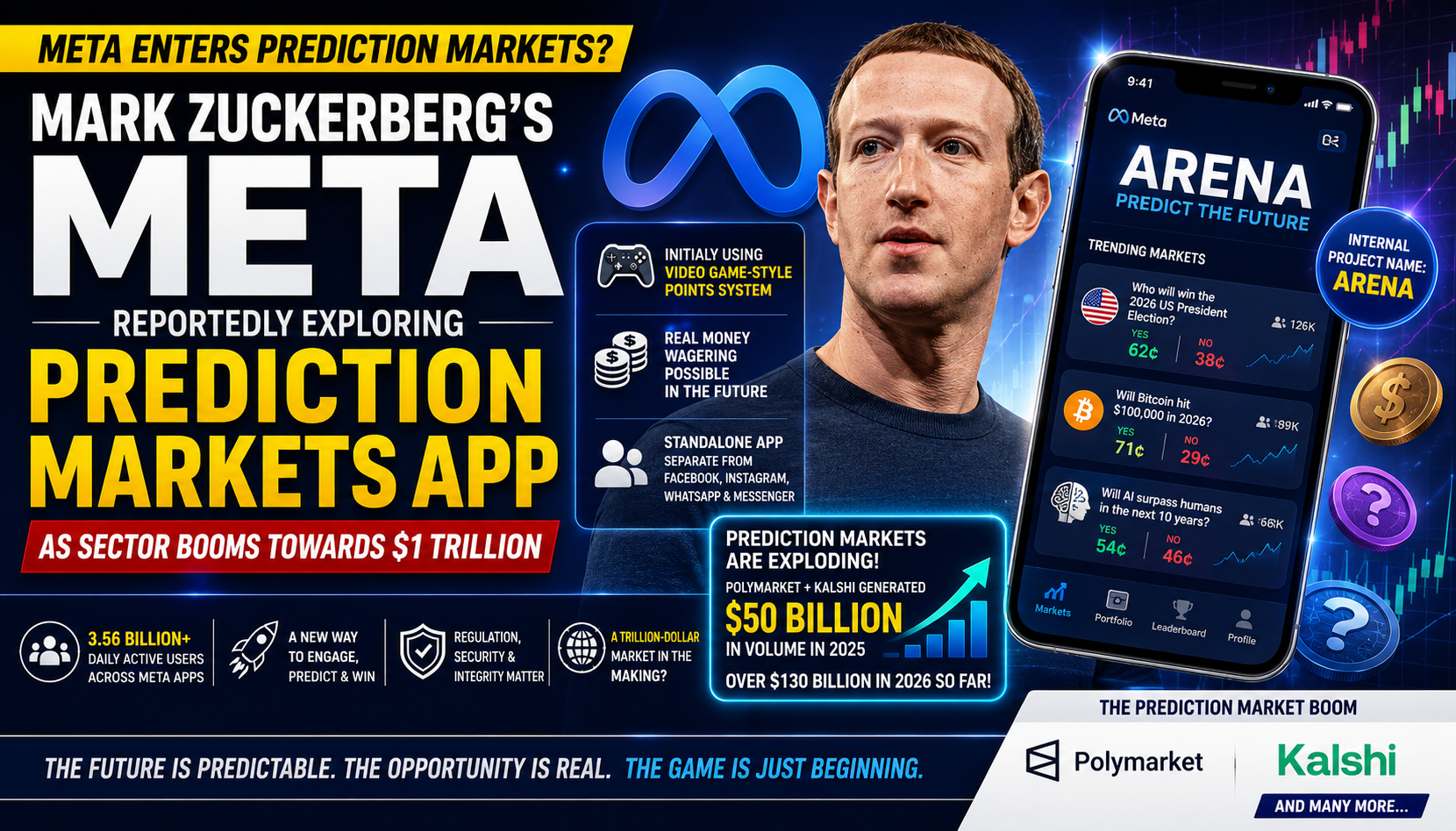
Mark Zuckerberg’s Meta Reportedly Exploring Prediction Markets as Sector Explodes Towards a Trillion-Dollar Future
The worlds of social media, finance, online gaming, cryptocurrency, and digital forecasting may be about to collide in a way few people could have imagined just a few years ago.
According to reports, Meta, the technology giant founded and led by Mark Zuckerberg, is exploring the development of a standalone prediction markets application internally known as “Arena.” While still reportedly in the experimental phase, the project has attracted significant attention across technology, gambling, financial trading, and regulatory circles because of what it could potentially represent.
If launched, Arena could place Meta directly into one of the fastest-growing digital sectors in the world: prediction markets.
The timing is notable.
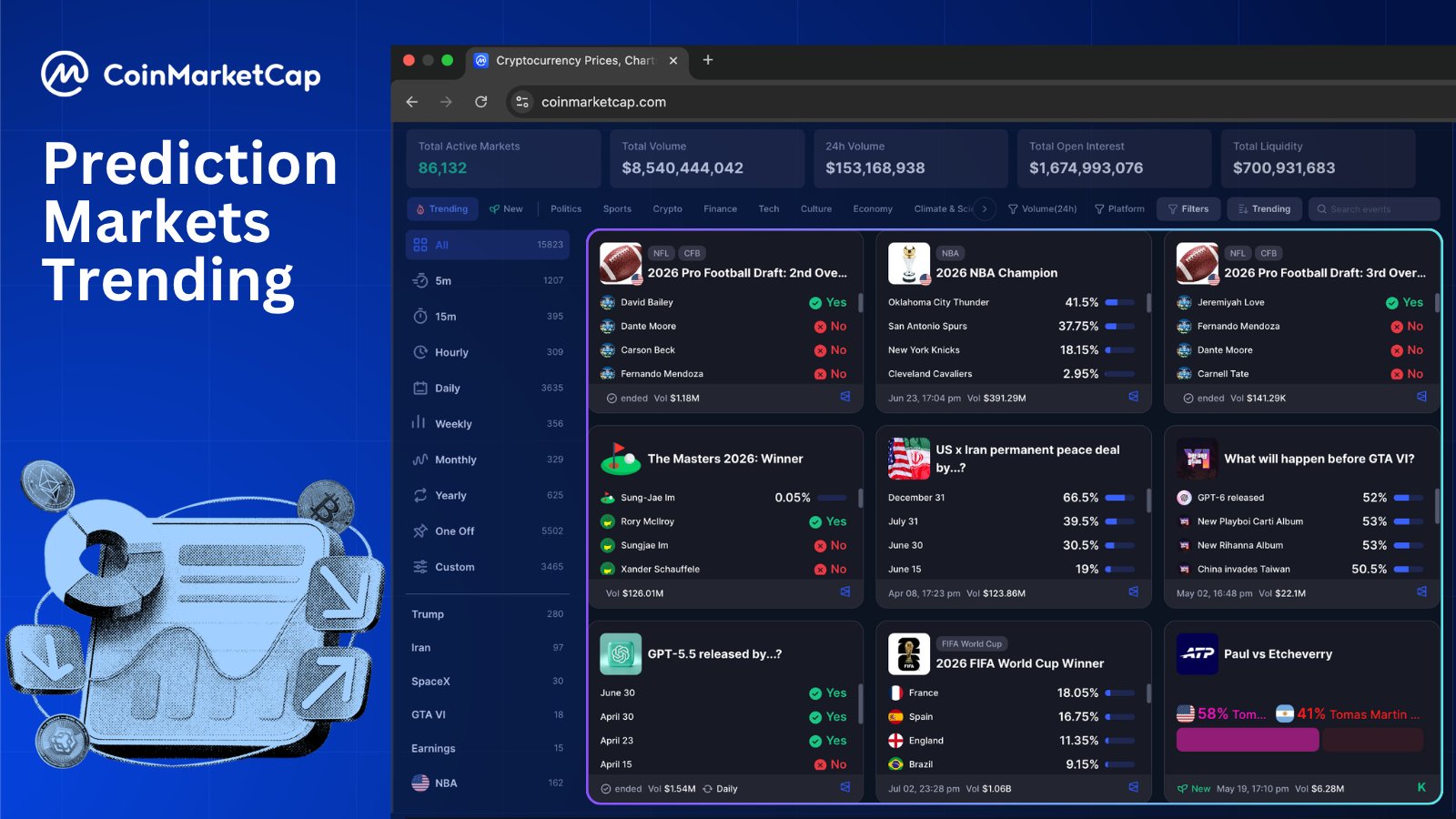
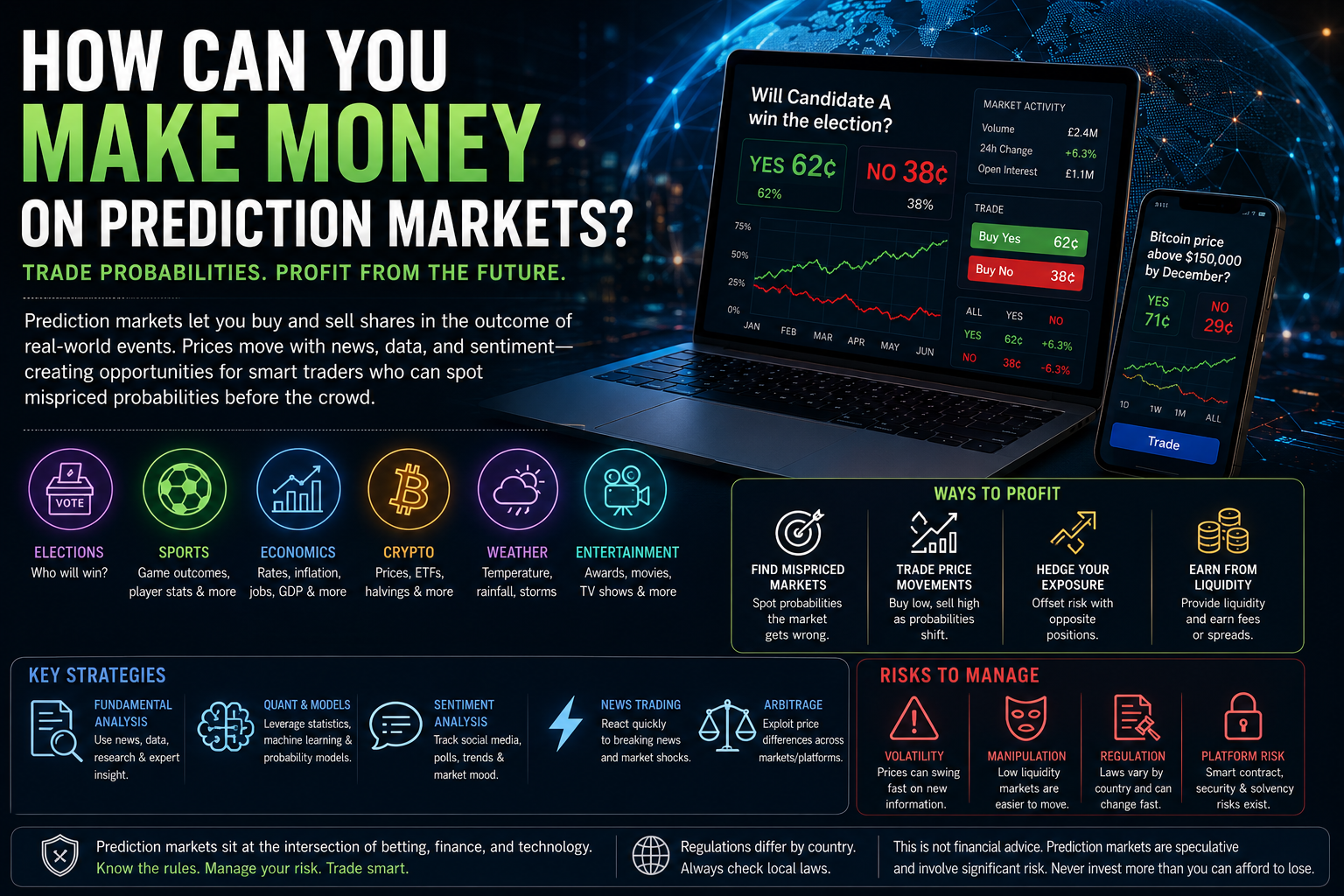
Prediction markets have moved from a niche curiosity used primarily by academics and political enthusiasts into a global phenomenon attracting billions of dollars in trading activity and millions of participants worldwide.
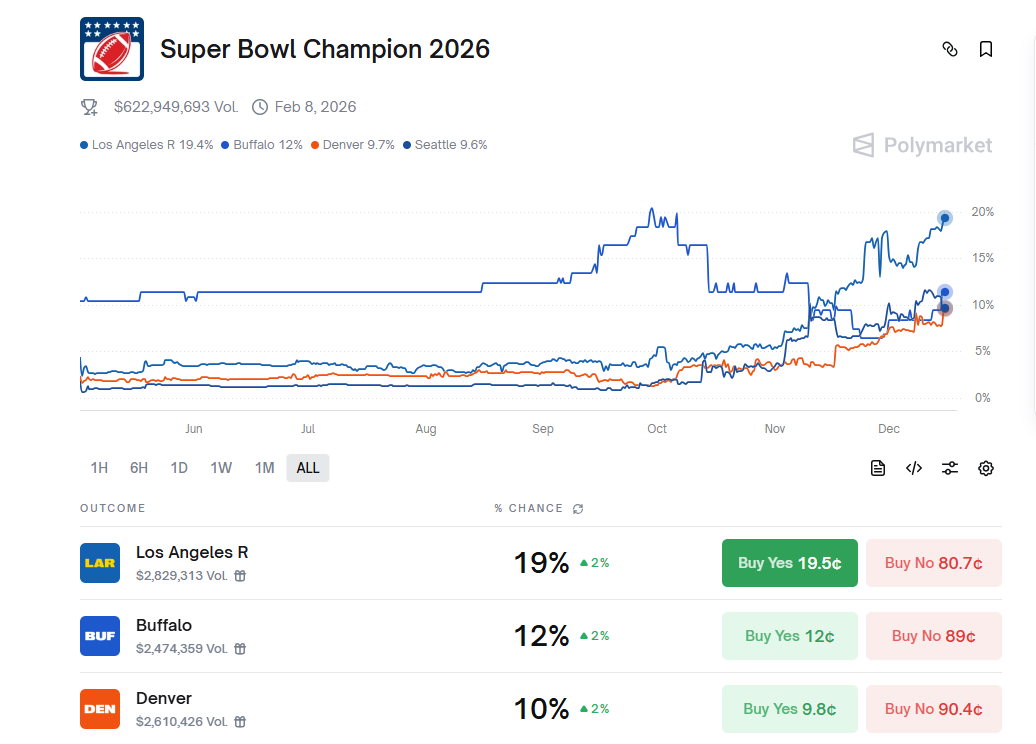
Platforms such as Polymarket and Kalshi have demonstrated that people are increasingly interested in forecasting future events and putting their convictions to the test.
Rather than simply expressing an opinion on social media, prediction markets allow participants to buy and sell positions on what they believe will happen in the future.
Questions can cover almost anything imaginable.
Who will win the next presidential election?
Will a specific company exceed earnings expectations?
Will inflation rise or fall?
Will a major sporting event end in victory for a particular team?
Will a new technology product launch on schedule?
Will a geopolitical event occur before a specified date?
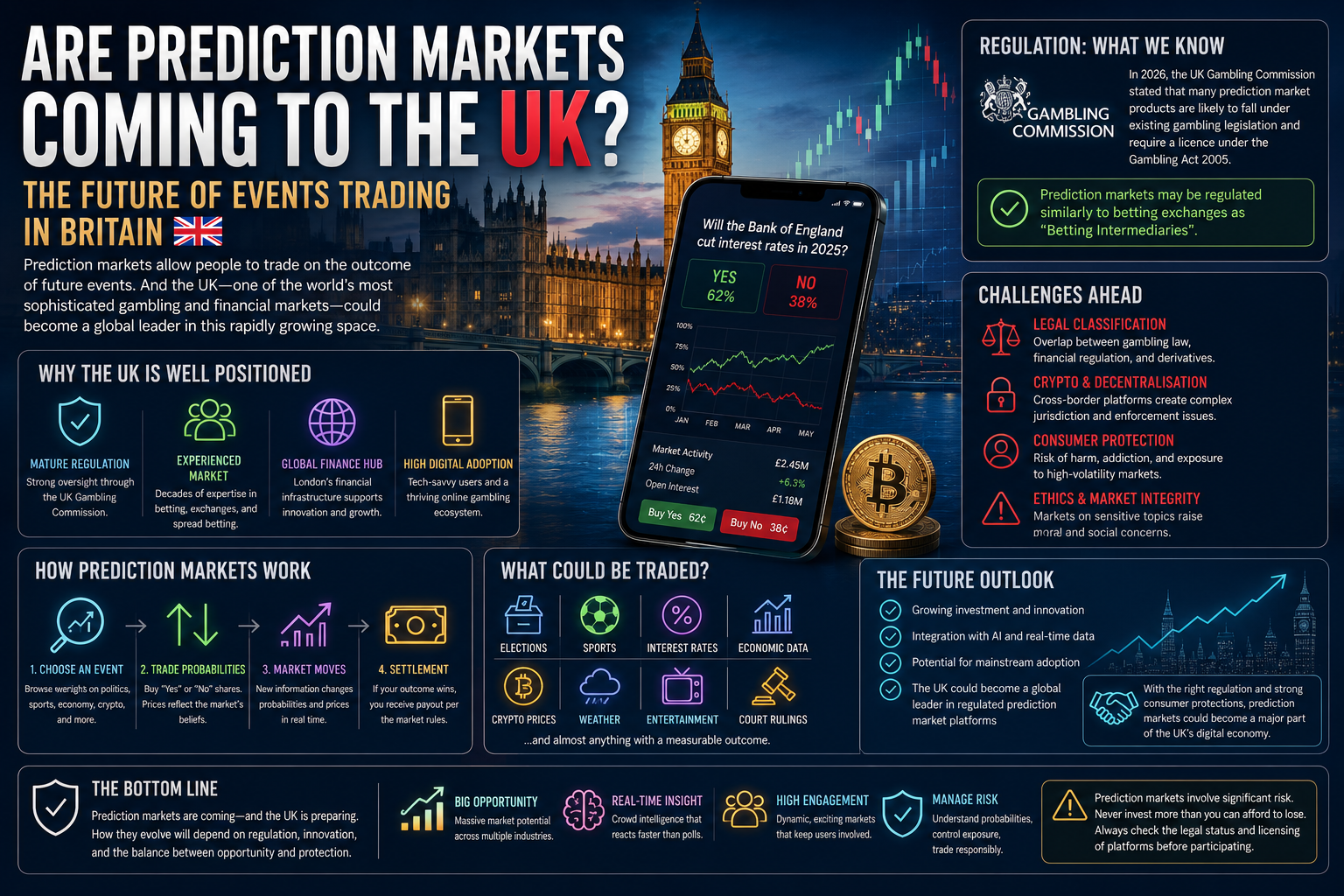
Participants effectively trade probabilities, creating a constantly updating market-generated forecast.
The concept is deceptively simple but extraordinarily powerful.
Supporters argue prediction markets aggregate information more efficiently than polls, surveys, focus groups, or even expert panels because participants have a direct incentive to be correct.
Critics, meanwhile, warn that such markets could create opportunities for manipulation, insider trading, misinformation, and excessive speculation.
Regardless of which side one takes, the numbers suggest prediction markets are becoming impossible to ignore.
Industry estimates suggest that Polymarket and Kalshi generated approximately $50 billion in trading volume during 2025.
Reports indicate combined trading activity has already exceeded $130 billion during 2026.
Some analysts believe the sector could eventually surpass $1 trillion in annual trading volume before the end of the decade.
Those figures explain why Meta may now be paying attention.
For decades, Meta has built products around human behaviour.
Facebook captured social relationships.
Instagram captured visual sharing.
WhatsApp captured private communication.
Messenger enhanced digital conversations.
Threads entered real-time public discussion.
Now prediction markets potentially offer something equally compelling: participation in future events.
At its core, prediction trading is social.
People naturally enjoy debating what will happen next.
Prediction markets transform those debates into measurable outcomes.
If Arena eventually launches, Meta could leverage an audience unlike anything available to existing competitors.
The company reported approximately 3.56 billion daily active users across its family of applications earlier this year.
No prediction market platform in history has ever had access to an audience remotely approaching that scale.
This is perhaps the most significant aspect of the story.
The prediction market industry has largely grown without involvement from the world’s largest technology platforms.
Polymarket emerged from the cryptocurrency sector.
Kalshi developed within regulated financial frameworks.
Other participants have come from gambling, trading, fintech, and blockchain backgrounds.
Meta entering the sector would represent the arrival of one of the largest digital distribution networks ever assembled.
Interestingly, reports suggest Arena would initially avoid real-money wagering entirely.
Instead, Meta may adopt a points-based system similar to the company’s earlier Forecast initiative.
Forecast launched during the COVID-19 era and allowed users to make predictions and accumulate points based on accuracy.
While Forecast ultimately shut down in 2022, it demonstrated Meta’s longstanding interest in collective forecasting and crowd intelligence.
A points-based approach would provide several advantages.
Most importantly, it would reduce regulatory complexity.
Prediction markets involving real money face significant legal scrutiny in many jurisdictions.
Questions frequently arise regarding whether they should be classified as financial products, derivatives, gambling products, securities, or entirely new categories.
By initially using virtual points, Arena could potentially focus on engagement, user experience, data collection, and network effects without immediately entering the complex world of financial regulation.
Such a strategy would mirror approaches used by many successful gaming and social platforms.
Build the audience first.
Monetize later.
Whether Meta eventually introduces cash-based prediction markets remains unknown.
Reports suggest the possibility has not been ruled out.
If that transition ever occurs, however, it would likely represent one of the most significant developments in the industry’s history.
Imagine a future where billions of users can instantly forecast elections, sporting events, economic indicators, entertainment outcomes, technology launches, and world events through a Meta-owned ecosystem.
The resulting liquidity could dwarf anything currently seen within the prediction market sector.
Naturally, this possibility raises important questions.
One concern involves information integrity.
Prediction markets function best when participants have access to accurate information.
Yet social media platforms have long struggled with misinformation, manipulation, and coordinated influence campaigns.
Combining prediction markets with massive social ecosystems could create unique challenges.
Would influential accounts be able to move market sentiment?
Could coordinated groups manipulate outcomes?
Would false information spread for financial gain?
These questions already concern regulators examining existing prediction market operators.
They would likely become even more significant if a platform with billions of users entered the space.
Another issue involves insider information.
Recent events have highlighted these risks.
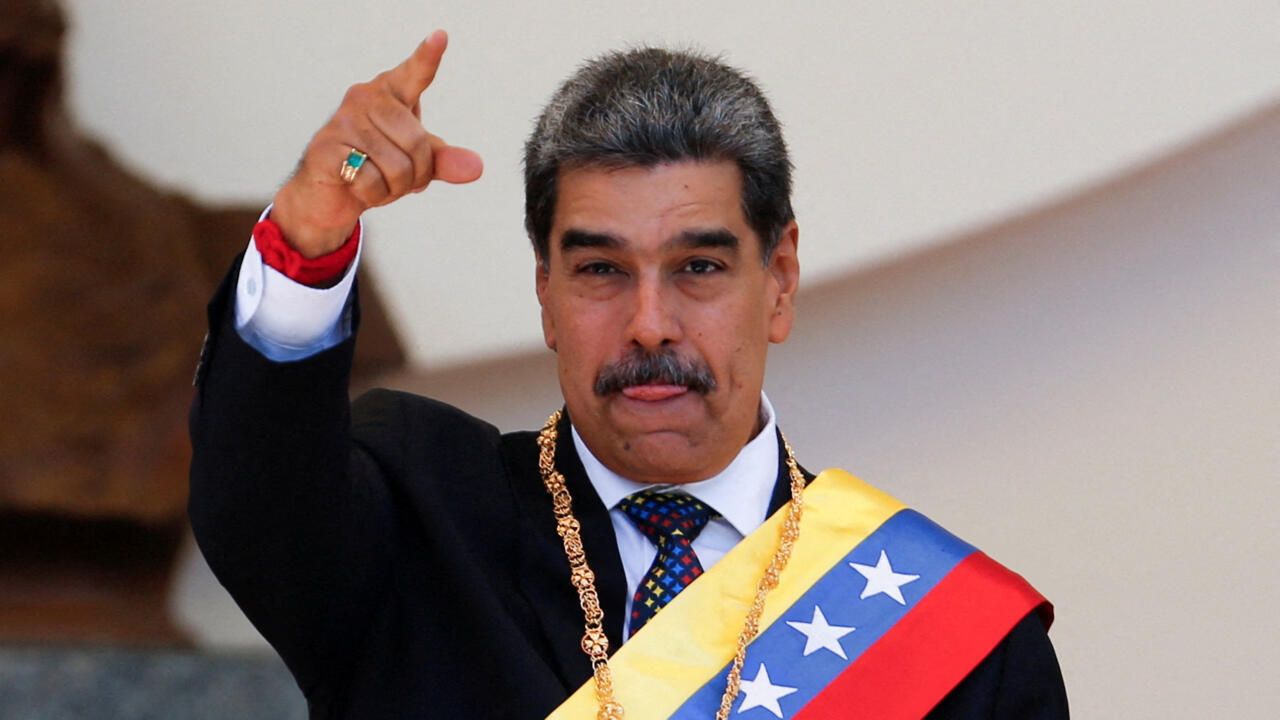
Federal prosecutors recently alleged that a member of the U.S. Special Forces used confidential information regarding a sensitive operation involving Venezuelan President Nicolás Maduro to place prediction market wagers.
Authorities claimed the individual generated substantial profits from information unavailable to the public.
Cases such as these illustrate why regulators remain cautious.
Prediction markets can sometimes create incentives to exploit privileged knowledge.
As the sector grows, regulators are expected to increase oversight, monitoring, and enforcement efforts.
Political reaction has already begun.
Senator Richard Blumenthal publicly criticized reports surrounding Meta’s prediction market ambitions.
His comments reflect broader concerns regarding technology companies expanding into increasingly immersive and potentially addictive forms of digital engagement.
Critics argue that social media companies already compete aggressively for user attention.
Adding prediction-based participation mechanisms could further increase engagement while potentially exposing users to additional behavioural risks.
Supporters counter that prediction markets represent information tools rather than gambling products.
They argue that forecasting future events can improve public understanding, encourage research, and create more accurate assessments of probability.
The debate is unlikely to disappear anytime soon.
Beyond Meta itself, the larger story may be the continued convergence of multiple industries.
The boundaries separating gambling, investing, gaming, social media, cryptocurrency, and prediction markets are becoming increasingly blurred.
Modern users expect interactivity.
They expect participation.
They expect real-time engagement.
Prediction markets satisfy all three requirements simultaneously.
For companies operating in online gambling, sports betting, lottery products, financial technology, and digital entertainment, the rise of prediction markets presents both opportunities and challenges.
Some view prediction markets as competitors.
Others see them as complementary products.
Many are still trying to determine where the sector ultimately fits within the broader digital economy.
What seems increasingly clear is that prediction markets are moving into the mainstream.
When one of the world’s largest technology companies reportedly begins developing products for a category, it is often a signal that the category has reached an important tipping point.
Whether Arena eventually launches or not, Meta’s reported interest demonstrates that prediction markets are no longer a niche phenomenon.
They are becoming part of the broader conversation about how people consume information, express opinions, assess probabilities, and engage with the future.
The next few years could determine whether prediction markets remain a specialist activity used by enthusiasts or evolve into a global mainstream product used by hundreds of millions of people every day.
If Meta decides to proceed, the answer may arrive far sooner than many expect.
One thing is certain.
The race to own the future of prediction markets has only just begun.