

The rapid growth of online gambling, financial technology and artificial intelligence has introduced millions of people to entirely new forms of risk and reward. At first glance, prediction markets and slot machines can appear surprisingly similar. Both involve placing money on uncertain outcomes, both can deliver significant payouts, and both attract participants hoping to outperform the average player. However, beneath these superficial similarities lies a fundamental difference that every player, investor and analyst should understand.
Prediction markets are built around information. Slot machines are built around randomness.
Understanding that distinction is essential because it highlights the difference between making decisions based on probability and data versus relying entirely upon chance.
Two Completely Different Philosophies
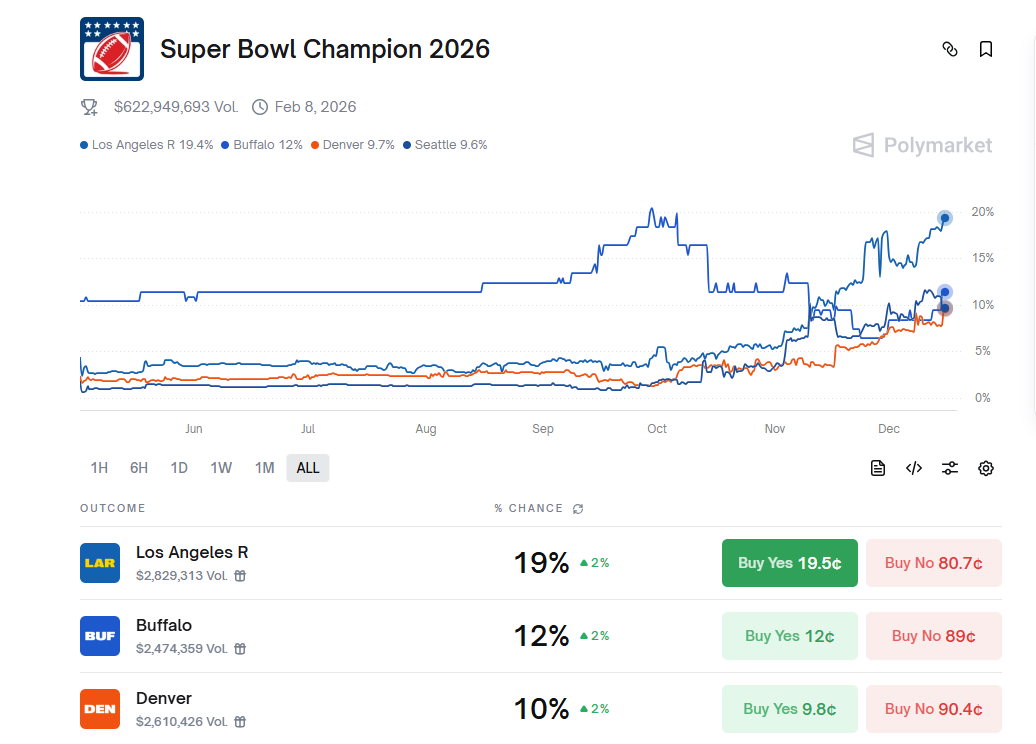
A prediction market attempts to estimate the likelihood of future events.
Participants buy and sell positions based upon what they believe will happen. These events may include elections, sporting events, economic indicators, entertainment awards, technological developments or even weather forecasts. The collective opinions of thousands of informed participants combine to produce market prices that often reflect the perceived probability of an event occurring.
Every participant is trying to identify information that the wider market has either overlooked or not yet fully priced in.
Slot machines work in precisely the opposite manner.
Every spin begins with no knowledge whatsoever about the next outcome. Previous spins have absolutely no influence over future results. The machine does not remember whether it has recently paid a jackpot, produced several bonuses or generated a long losing streak.
Each spin is an entirely independent random event.
The Role of Information
Prediction markets reward people who possess useful information.
This information could come from statistical analysis, historical trends, polling data, financial reports, weather models, sports analytics or specialist industry knowledge.
For example, someone following political polling every day may identify subtle momentum shifts before the wider market reacts.
A sports analyst might notice that several key injuries have not yet been reflected in betting prices.
An economist may understand how upcoming inflation figures could influence financial markets.
In each case, information creates an edge.
Slot machines offer no comparable advantage.
No amount of historical observation can predict the symbols on the next spin.
Watching hundreds of previous results provides no meaningful information because every outcome is generated independently using certified Random Number Generators (RNGs).
Artificial Intelligence Changes Prediction Markets
Artificial intelligence has become one of the most significant developments within prediction markets.
Modern AI systems can analyse enormous quantities of information including:
Economic reports.
Social media sentiment.
News articles.
Satellite imagery.
Weather data.
Corporate filings.
Historical market behaviour.
Sports performance metrics.
Political polling.
Search engine trends.
Machine learning models continuously identify patterns that would be impossible for a human to recognise manually.
As computing power increases, prediction markets increasingly become competitions between better models rather than better guesses.
The participant with superior information processing often gains an advantage.
No AI system can accurately predict individual slot spins.
The Random Number Generator intentionally prevents exactly that.
Understanding Random Number Generators
Modern online slot machines use sophisticated Random Number Generators that produce millions of numbers every second.
The instant a player presses the spin button, the game selects whichever random value exists at that precise moment.
That value determines the symbols shown on the reels.
The next spin uses an entirely different random value.
Nothing before or after influences that selection.
This means there is no hidden pattern waiting to be discovered.
No sequence to decode.
No timing strategy.
No mathematical shortcut.
Every certified casino game undergoes rigorous testing to ensure true statistical randomness.
Probability Versus Prediction
One of the biggest misconceptions in gambling is confusing probability with prediction.
Prediction markets attempt to forecast which outcome is most likely.
Slots simply produce outcomes according to predefined probabilities.
These are entirely different concepts.
A prediction market participant might correctly estimate that Candidate A has a 72% chance of winning an election.
That estimate can improve over time as more information becomes available.
A slot machine does not estimate anything.
Its mathematics are fixed before the first spin ever takes place.
Every possible outcome already exists within the game’s probability model.
The machine simply selects one at random each time.
Can Skill Improve Results?
Prediction markets reward skill.
Successful participants often possess expertise in statistics, economics, behavioural psychology, financial modelling or specialist industries.
They constantly update their beliefs as new information becomes available.
Good decision making can produce better long-term results than the average participant.
Slots do not reward prediction skill.
Players can improve bankroll management.
They can choose games with higher Return to Player (RTP) percentages.
They can understand volatility.
They can manage session length.
However, none of these factors influence the symbols appearing on the reels.
The outcome itself remains entirely random.
Market Efficiency
Prediction markets gradually become more efficient as more participants contribute information.
This phenomenon resembles financial markets.
Whenever new information becomes available, participants immediately begin adjusting prices.
Incorrect assumptions are gradually replaced by better estimates.
This constant competition between informed participants helps improve overall accuracy.
Slot machines never become more predictable regardless of how many people play.
One million previous spins reveal nothing useful about the next one.
Human Psychology
Both environments expose interesting aspects of human psychology.
Prediction market participants often suffer from confirmation bias.
They may seek information supporting their existing beliefs while ignoring contradictory evidence.
Overconfidence can also become a major problem.
Successful analysts constantly question their own assumptions.
Slot players face different psychological challenges.
Many experience the Gambler’s Fallacy.
After seeing ten losing spins, they may incorrectly believe that a win is “due.”
In reality, the probability remains exactly the same.
Others may develop the Hot Hand Fallacy, believing recent wins somehow increase future success.
Again, randomness makes this belief incorrect.
Understanding these biases is important in both activities, although they manifest differently.
Expected Value
Prediction markets often revolve around identifying positive expected value.
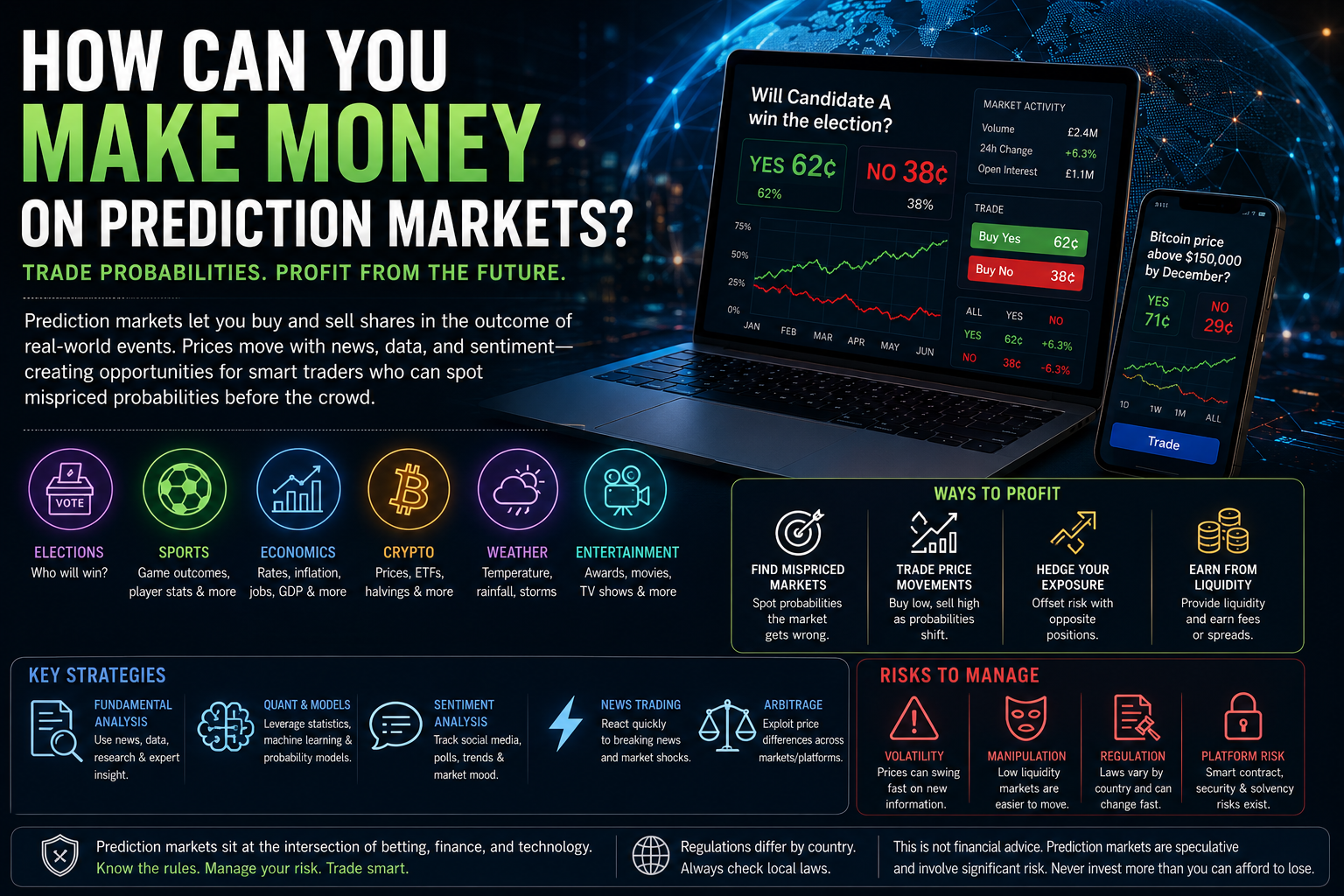
If a market believes an event has a 40% probability but careful analysis suggests the true probability is closer to 55%, there may be value in participating before prices adjust.
Success comes from identifying mispriced probabilities.
Slot machines already incorporate their expected value into the game design.
The RTP percentage determines the long-term average return.
For example, a game with a 96% RTP theoretically returns £96 for every £100 wagered over an extremely large number of spins.
That remaining percentage represents the mathematical house edge.
Unlike prediction markets, players cannot uncover hidden positive expected value simply through better analysis.
The Importance of Large Sample Sizes
Both fields rely upon statistics, but in very different ways.
Prediction models improve by analysing increasingly large datasets.
The more information available, the more reliable forecasts often become.
Machine learning systems thrive on enormous quantities of historical data.
Slots require large sample sizes for a different reason.
Short-term results vary dramatically due to variance.
One player might win a jackpot within ten spins.
Another may lose for hundreds of spins.
Only across millions of simulated spins does the game’s theoretical RTP become visible.
Individual sessions tell us almost nothing about the underlying mathematics.
Entertainment Versus Forecasting
Perhaps the most important distinction concerns purpose.
Prediction markets exist primarily to aggregate information and forecast future events.
Financial reward encourages participants to reveal their true beliefs through market pricing.
Their value extends beyond gambling because businesses, governments and researchers often study market probabilities as forecasting tools.
Slot machines exist primarily for entertainment.
They provide excitement through visual design, engaging bonus features, sound effects, progressive jackpots and the anticipation created by every spin.
Their goal is not forecasting but enjoyment.
Winning remains possible, but every outcome is still determined by random probability rather than predictive insight.
AI Cannot Defeat Randomness
Artificial intelligence has transformed countless industries, from medicine and finance to logistics and autonomous vehicles.
It excels whenever meaningful patterns exist within data.
Prediction markets naturally benefit because information continuously changes and can be analysed more effectively.
Randomness presents an entirely different challenge.
A perfectly random system contains no exploitable pattern.
Even the world’s most advanced supercomputer cannot predict the next certified slot spin because there is no hidden information to discover.
AI can recommend games with higher RTP percentages, explain volatility, estimate bankroll requirements and analyse casino statistics, but it cannot forecast individual outcomes.
The mathematics simply does not allow it.
Why Understanding the Difference Matters
As technology continues to evolve, more people are interacting with both predictive systems and games of chance. Artificial intelligence is making forecasting models increasingly sophisticated, while regulated online casinos continue to deliver games whose outcomes are governed by independently tested random number generators.
Recognising the distinction helps set realistic expectations. Prediction markets can reward research, expertise and superior information because they operate in environments where new data continually changes the perceived probability of future events. Success depends on analysing that information more effectively than others.
Slot machines operate under a completely different principle. Their outcomes are intentionally random, independent and unaffected by previous results, personal skill or predictive technology. Players can make informed choices about game selection, RTP and bankroll management, but no amount of analysis can predict the next spin.
Ultimately, both have their place. Prediction markets appeal to those who enjoy analysing information and estimating probabilities in dynamic environments. Slot machines appeal to those seeking entertainment, excitement and the possibility of a lucky win. Understanding where information ends and randomness begins is one of the most important distinctions anyone can make when engaging with either activity.